White coneflower varieties
White coneflowers are selections of purple coneflower and its hybrids with white ray petals. NC State Extension lists white cultivars of Echinacea purpurea, a species native to the eastern and central United States. The table below compares every variety we list side by side.
- Varieties
- 6
- Height
- 1½–3 ft (46–90 cm)
- Hardiness
- USDA zones 3–9
- Form
-
5 Single
1 Double
All 6 white coneflower varieties
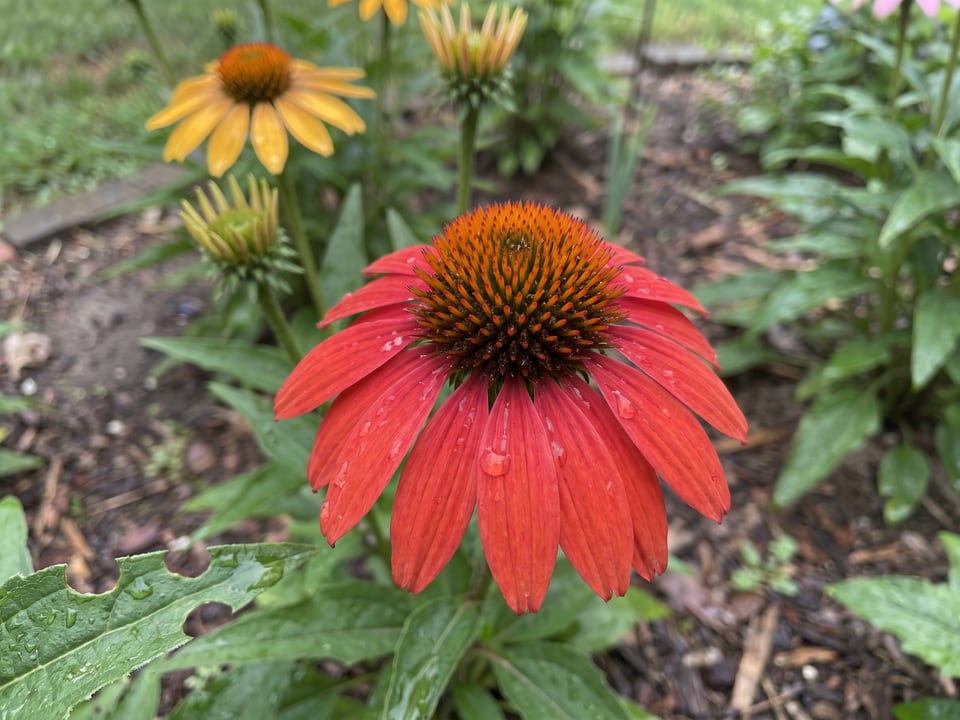
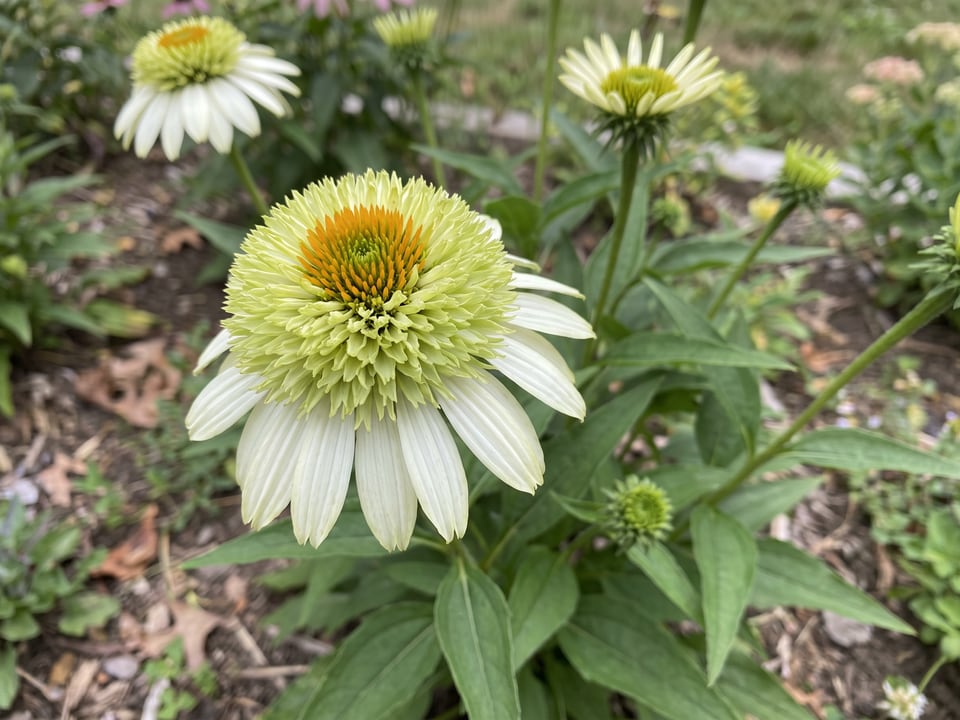
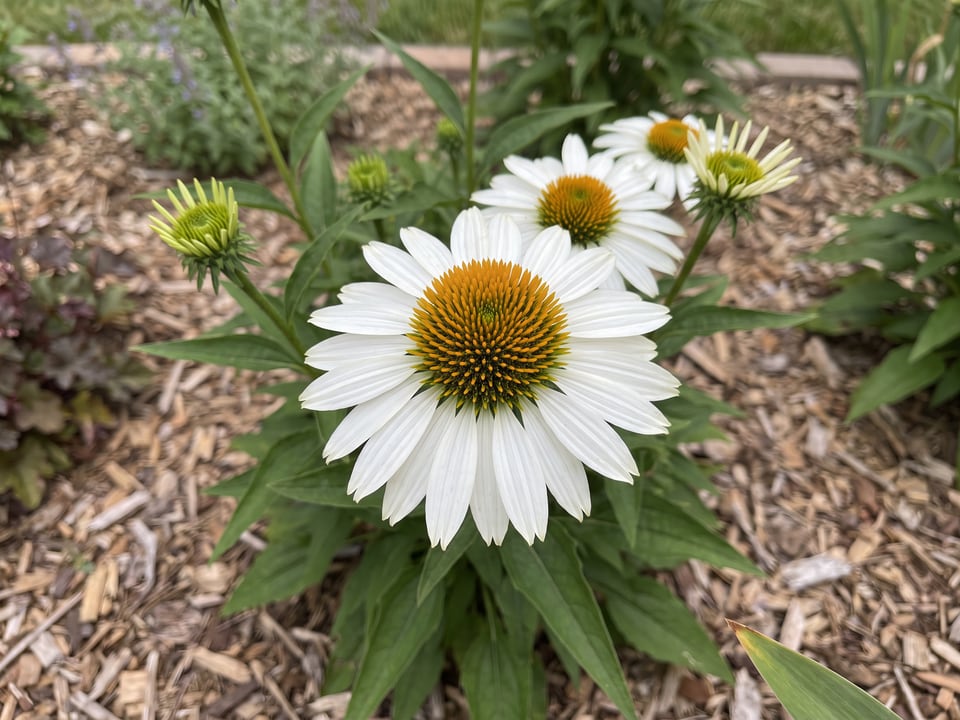
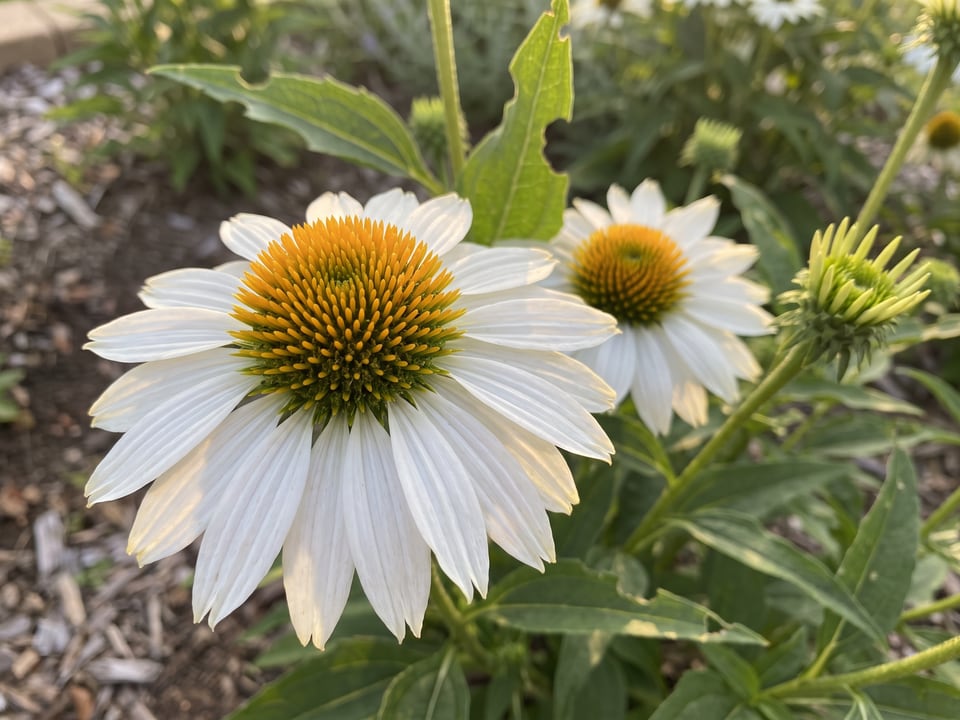
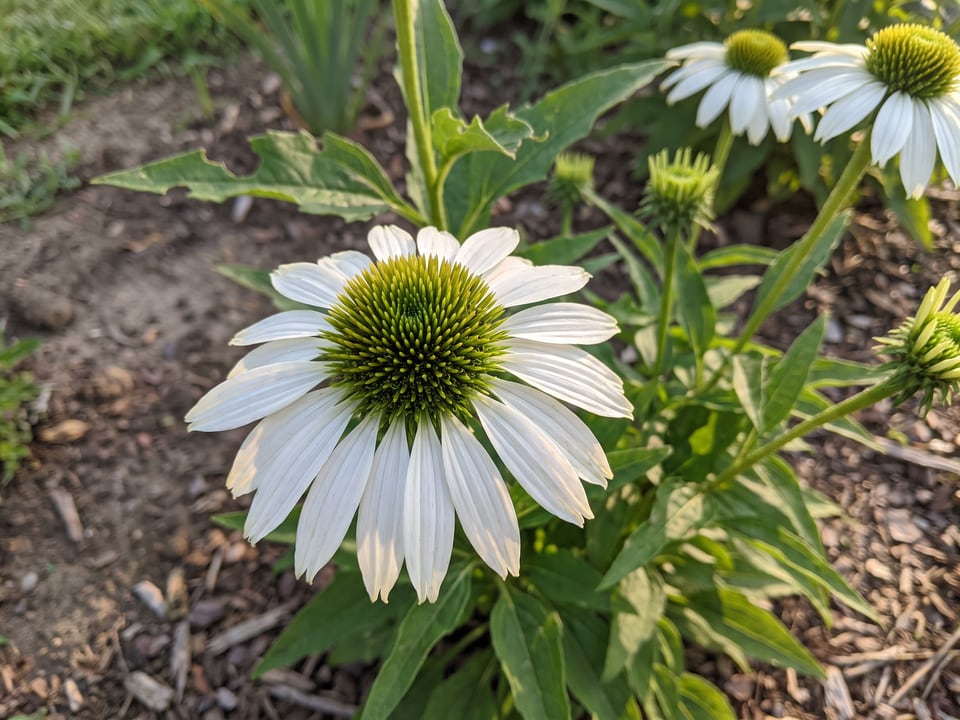
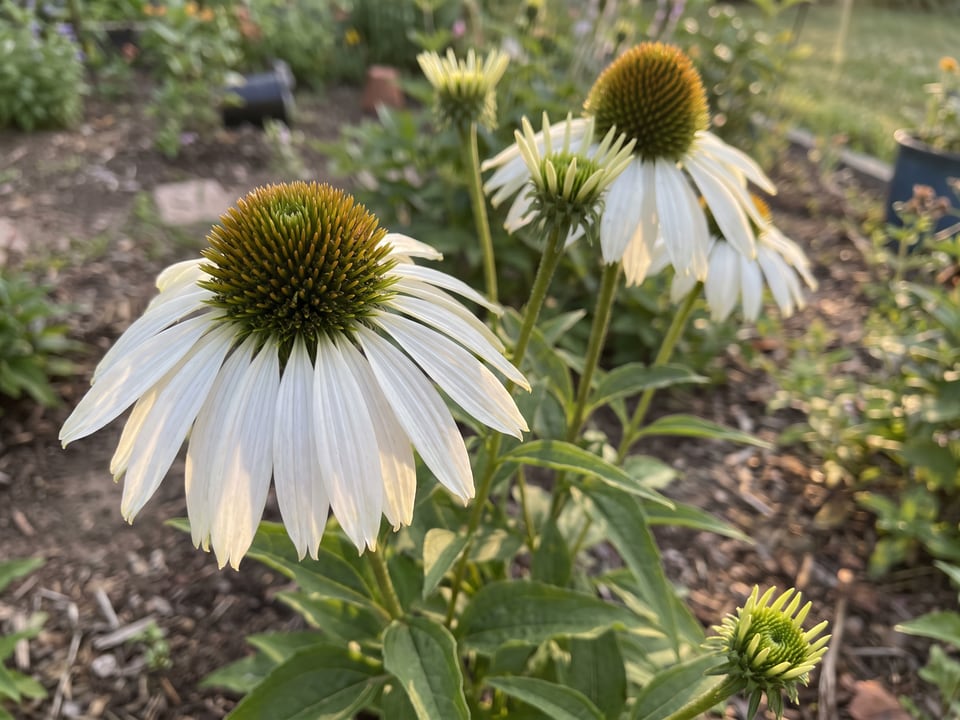
How to choose
-
Check the Color column for how the flowers age. The Chicago Botanic Garden trial recorded that white coneflowers differ in how long the petals stay clean before fading, and one faded late with a yellowish cast.
-
Compare the Hardiness column with your zone. The Chicago Botanic Garden notes that hybrid cultivars are commonly rated for USDA zones 4 to 9.
-
Look at the Bloom time column. Clemson Extension says coneflowers bloom in midsummer and continue to flower sporadically until frost.
Compare side by side
| Color | Sunlight | |||||
|---|---|---|---|---|---|---|
| Cheyenne Spirit | Single | 2–2½ ft (56–76 cm) | 4–9 | Early summer, Midsummer, Late summer, Fall | Full sun, Part shade | |
| Coconut Lime | Double | 2–2½ ft (60–75 cm) | 3–9 | Midsummer, Late summer, Fall | Full sun, Part shade | |
| Fragrant Angel | Single | 2–2½ ft (65–75 cm) | 3–9 | Midsummer, Late summer, Fall | Full sun, Part shade | |
| PowWow White | Single | 1½–2 ft (46–61 cm) | 3–8 | Early summer, Midsummer, Late summer | Full sun, Part shade | |
| Virgin | Single | 1½–2 ft (46–61 cm) | 3–8 | Early summer, Midsummer, Late summer | Full sun, Part shade | |
| White Swan | Single | 2½–3 ft (75–90 cm) | 3–9 | Midsummer, Late summer, Fall | Full sun, Part shade |
Frequently asked questions
Should I deadhead white coneflowers?
It is a trade-off. The Chicago Botanic Garden says deadheading improves the floral display and reduces seedlings but also removes a seed source for birds. Clemson Extension suggests delaying deadheading because goldfinches visit the seed heads in winter.