Flowers toxic to cats: tulips, lilies, sunflowers and more
Oct 2, 2026 · 7 min read
Which garden flowers are toxic to cats and dogs? ASPCA status for 11 genera, why lily pollen can cause kidney failure within 3 days, and who to call.
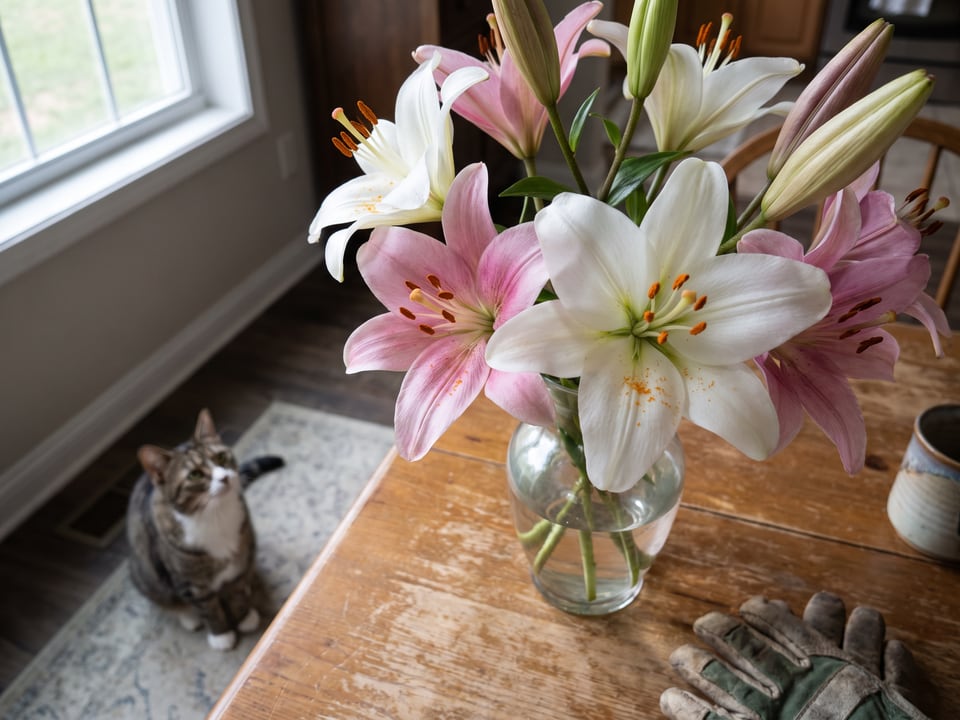
Of the flowers in this catalog, the ASPCA lists tulips, true lilies, daffodils, dahlias, hostas and peonies as toxic to cats, and sunflowers and zinnias as non-toxic. True lilies (Lilium) and daylilies (Hemerocallis) are the serious case: the FDA says a cat can develop fatal kidney failure in less than three days after eating a small piece of the plant, licking pollen off its fur or drinking vase water. For the other toxic flowers the ASPCA lists mostly stomach signs, but for daffodils it warns that large amounts can cause convulsions, low blood pressure, tremors and heart arrhythmias.
Everything below comes from the ASPCA toxic and non-toxic plant list for cats, its list for dogs, its individual plant pages and the FDA’s Lovely Lilies and Curious Cats. A genus missing from both ASPCA lists is marked “not listed”.
Toxicity by flower: cats and dogs
| Flower | Genus | Cats | Dogs | Signs listed by the ASPCA |
|---|---|---|---|---|
| Lilies | Lilium | Toxic | Non-toxic (Easter lily entry) | Cats: kidney failure |
| Daylilies (not in this catalog) | Hemerocallis | Toxic | Non-toxic | Cats: vomiting, inappetence, lethargy, kidney failure, death |
| Tulips | Tulipa | Toxic | Toxic | Vomiting, depression, diarrhea, drooling; most toxin in the bulb |
| Daffodils | Narcissus | Toxic | Toxic | Vomiting, drooling, diarrhea; large amounts cause convulsions, low blood pressure, tremors, heart arrhythmias; bulbs most poisonous |
| Dahlias | Dahlia | Toxic | Toxic | Mild gastrointestinal signs, mild dermatitis |
| Hostas | Hosta | Toxic | Toxic | Vomiting, diarrhea, depression |
| Peonies | Paeonia | Toxic | Toxic | Vomiting, diarrhea, depression |
| Sunflowers | Helianthus | Non-toxic | Non-toxic | None listed |
| Zinnias | Zinnia | Non-toxic | Non-toxic | None listed |
| Coneflowers | Echinacea | Not listed | Not listed | None |
| Black-eyed Susans | Rudbeckia | Not listed | Not listed | None |
| Marigolds | Tagetes | Not listed | Not listed | None |
Two notes on the table. The ASPCA sunflower entry is filed under one species, Helianthus angustifolius (swamp sunflower), and its peony entry under Paeonia officinalis; we apply them to the genus the way the listing is commonly read, but the pages name only those species. The “marigold” you will find on the ASPCA non-toxic list is pot marigold, Calendula officinalis. That is a different plant from the Tagetes marigolds (French and African types) sold as bedding annuals, and the lists do not include Tagetes.
“Not listed” does not mean safe.
Are lilies toxic to cats?
Yes. The FDA calls true lilies and daylilies very dangerous for cats. It names Asiatic, Easter, Japanese show, Oriental, rubrum, stargazer, tiger and wood lilies, plus daylilies, and says the entire plant is toxic: stem, leaves, flowers, pollen and the water in the vase.
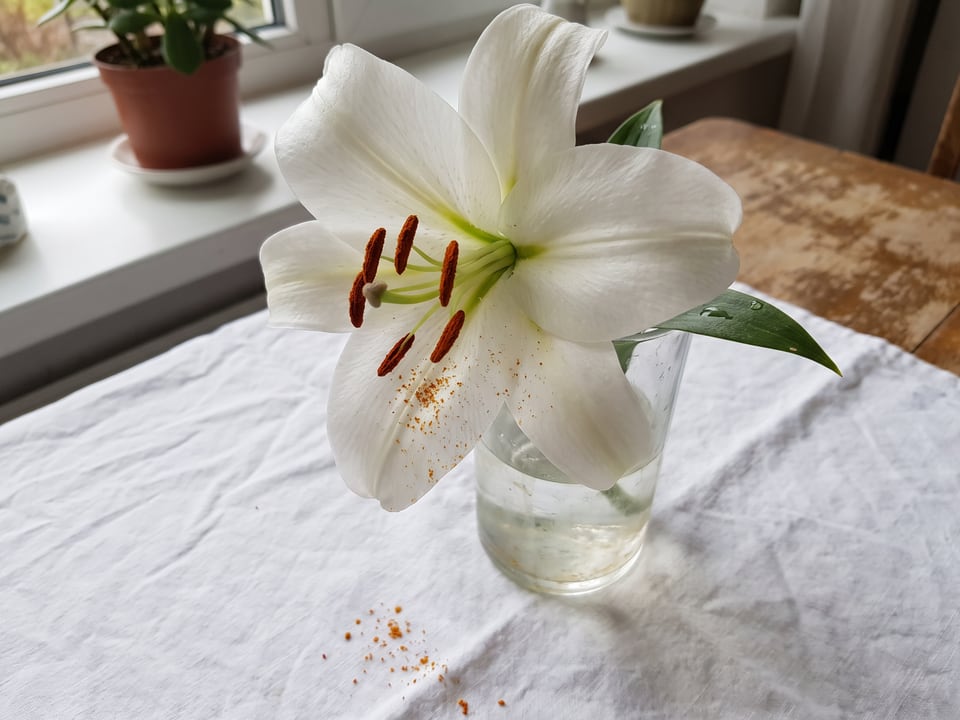
The timeline the FDA gives:
- 0 to 12 hours after eating: less activity, drooling, vomiting, no appetite
- 12 to 24 hours: signs of kidney damage
- 24 to 72 hours: kidney failure
This covers every lily in the lily hub, from Oriental hybrids like Stargazer to species such as the Tiger lily. All of them fall under the FDA warning.
Are cats allergic to lilies?
No. Lily toxicity is a poisoning. The ASPCA lists the toxic principle as unknown and the clinical sign in cats as kidney failure.
Lilies that are not true lilies
Several plants carry “lily” in the name without belonging to Lilium or Hemerocallis. The FDA says calla lilies and peace lilies cause mouth irritation, and Peruvian lily causes mild stomach upset; neither causes kidney failure in cats. Two other “lilies” are dangerous in a different way: the FDA warns that lily-of-the-valley and gloriosa lily can cause serious heart and organ damage, so keep those away from cats and dogs too. Hostas were once called plantain lilies, and the ASPCA still lists them under that name as well; they are toxic, with vomiting, diarrhea and depression as the signs.
Are lilies toxic to dogs?
The ASPCA’s Easter lily entry (Lilium longiflorum) lists it as non-toxic to dogs and horses and says cats are the only species known to be affected. Its general lily entry names cats only. The ASPCA’s daylily entry (Hemerocallis) also lists daylilies as non-toxic to dogs. A dog that eats lilies can still get an upset stomach.
Are tulips toxic to cats?
Yes, tulips are toxic to cats, dogs and horses according to the ASPCA. The toxic principles are tulipalin A and B, and the listed signs are vomiting, depression, diarrhea and drooling. The ASPCA says the highest concentration of toxin is in the bulb. If you are putting tulips in this fall, see how to plant tulip bulbs and plant them straight from the bag.
The ASPCA does not list kidney failure among the signs for tulips.
Are daffodils toxic to cats and dogs?
Yes, for both. Daffodils (Narcissus, including jonquils and paperwhites) contain lycorine and other alkaloids. The ASPCA lists vomiting, drooling and diarrhea, and warns that large amounts can cause convulsions, low blood pressure, tremors and heart arrhythmias. As with tulips, the bulbs are the most poisonous part.
Are sunflowers toxic to cats?
No. The ASPCA lists sunflowers as non-toxic to cats, dogs and horses. Sunflowers are a reasonable choice for a garden shared with pets, and so are zinnias, which the ASPCA also lists as non-toxic to all three. Both are annuals grown from seed; the annuals collection has them together, and how to grow sunflowers covers timing.
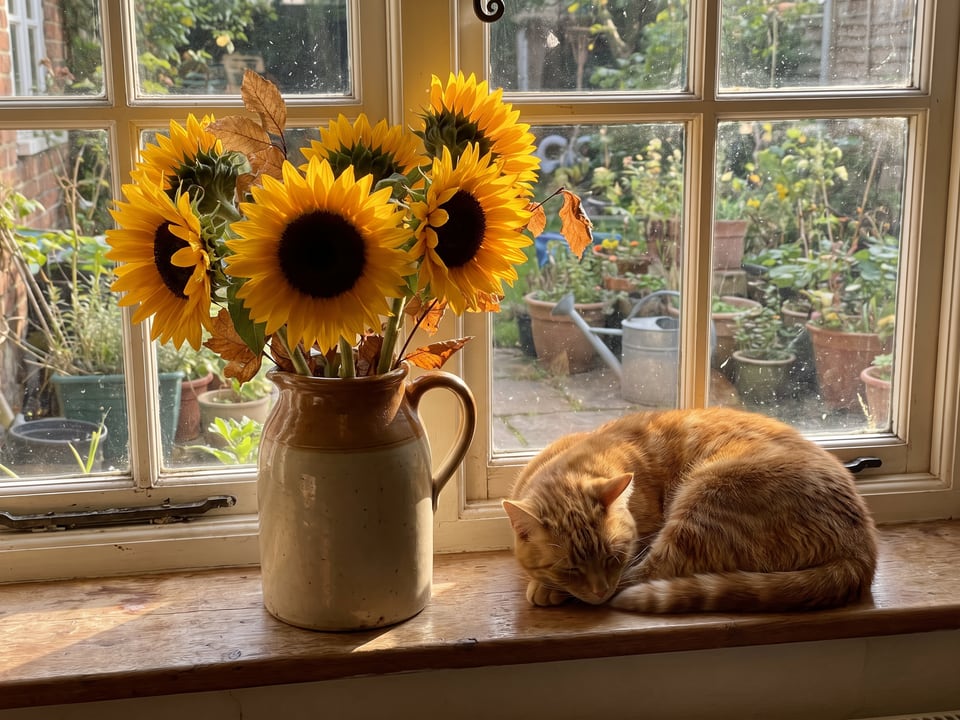
Are sunflowers safe for dogs?
Yes, the ASPCA lists them as non-toxic to dogs. “Non-toxic” means the plant is not expected to poison the animal. A dog that eats a lot of any plant can still get an upset stomach.
Dahlias, hostas and peonies
All three are on the ASPCA toxic list for both cats and dogs, with mild to moderate signs:
- Dahlias: mild gastrointestinal signs and mild dermatitis. The ASPCA does not name the toxic compound.
- Hostas: saponins; vomiting, diarrhea, depression.
- Peonies: paeonol; vomiting, diarrhea, depression.
None of these is listed with organ damage. For a dog that chews hosta leaves in a shade bed, the likely outcome is stomach upset, and a vet or poison line can tell you whether that needs a visit.
What about coneflowers, black-eyed Susans and marigolds?
We could not find Echinacea, Rudbeckia or Tagetes on either ASPCA list, toxic or non-toxic, so we are not giving them a status. If you need a firm answer for one of these, ask your vet or a poison control line directly.
Which flowers are safer for a home with cats?
From the genera in this catalog, sunflowers and zinnias are the two the ASPCA lists as non-toxic to cats and dogs. The FDA’s own advice is to choose safer flowers and keep lilies out of homes with cats altogether, including cut flowers in bouquets. For the other toxic flowers, keep bulbs stored where pets cannot reach them and plant them promptly.
What to do if your cat eats a lily or another toxic flower
Call your veterinarian or a pet poison line right away. The FDA lists two numbers:
- ASPCA Animal Poison Control Center: (888) 426-4435
- Pet Poison Helpline: 855-764-7661
With a cat and a lily, call before symptoms appear: the FDA timeline puts kidney failure within 24 to 72 hours, and says early veterinary treatment greatly improves the cat’s prognosis, while a delay of 18 hours or more after eating the plant generally means irreversible kidney failure. Have the plant name ready, or take the plant or a photo with you. This guide does not give treatment advice; that decision belongs to the vet.