How to grow sunflowers from seed (and how tall they get)
Oct 2, 2026 · 8 min read
How to grow sunflowers: sow seed in full sun after the last frost, 1 to 2 inches deep (UGA), in succession for a long season. Heights from 1-foot pot types to 16-foot giants.
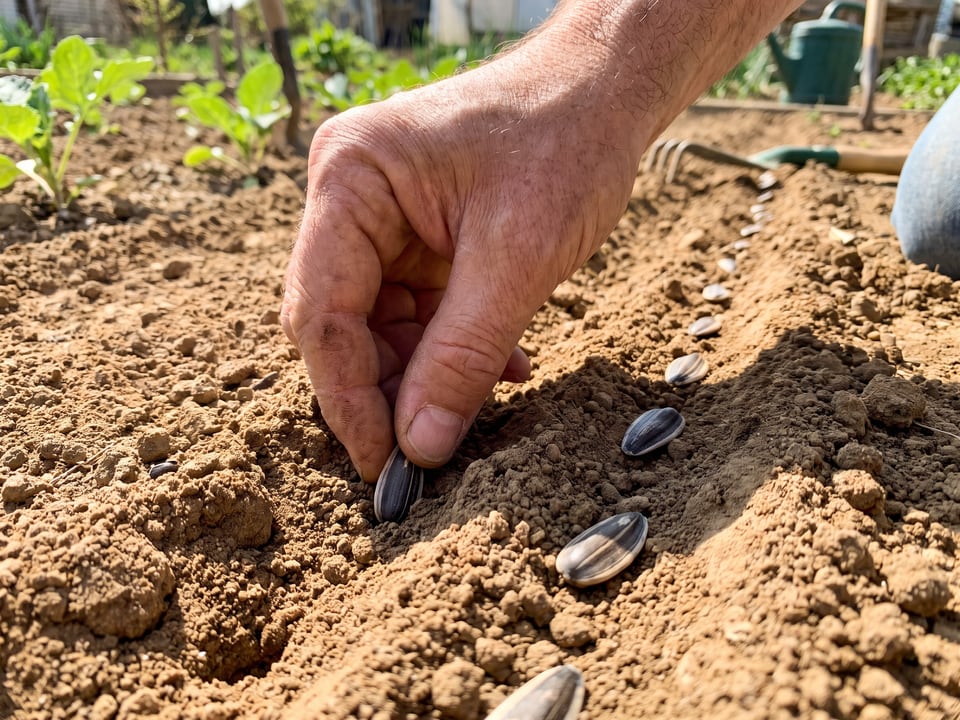
Sunflowers grow from seed sown straight into the bed where they will bloom, in full sun, after your last spring frost once the soil has warmed. Keep sowing every couple of weeks into early summer if you want flowers until fall.
For the sowing date where you live, enter your ZIP code in the spring flower planting calendar. This guide covers how to sow, how long sunflowers take, and how tall each type gets.
Spring sowing time
Sunflowers are not frost tolerant. The NC State plant toolbox says they are best planted by seed after the last spring frost. The University of Georgia’s home garden bulletin, Growing Sunflowers in the Home Garden, is more cautious: plant several weeks after the last frost, ideally into soil that has reached at least 60 °F (16 °C). In Georgia that works out to March in the south of the state and early May in the north.
Commercial cut-flower growers start earlier. Utah State’s cut-flower research puts the first sowing in northern Utah 7 to 14 days before the last frost, once soil reaches at least 45 °F (7 °C). Utah State notes that sunflower seedlings survived temperatures as low as 28 °F (-2 °C) before frost damage occurred. Expect to resow now and then if you copy that schedule; for a home bed the UGA timing is safer.
A simple rule that covers both: sow when the date in the planting calendar has passed and the soil no longer feels cold to your hand at seed depth. The calendar uses Oregon State Extension’s minimum of 50 °F (10 °C) soil; UGA’s 60 °F is the safer target if you can wait a little longer.
Can you plant sunflower seeds in summer?
Yes. Yes, as long as there is time to bloom before frost. Utah State sets the last sowing at 7 to 14 weeks before the predicted first hard frost. Check your first fall frost date and count back.
Succession sowing for a long season of blooms
A single sowing blooms over a few weeks and then it is over, especially with single-stem types. UGA recommends sowing every couple of weeks through the season. Utah State gives growers a tighter schedule: every 1 to 3 weeks for single-stem varieties and every 2 to 3 weeks for branching ones, which keep producing side flowers longer.
How to plant sunflower seeds
Pick a spot in full sun. NC State lists full sun (6 or more hours of direct sunlight a day) as the requirement, and UGA calls sunflowers “fast-growing annual plants that are best located in full sun.” UGA adds that they prefer slightly acidic soil, pH 6.0 to 6.8.
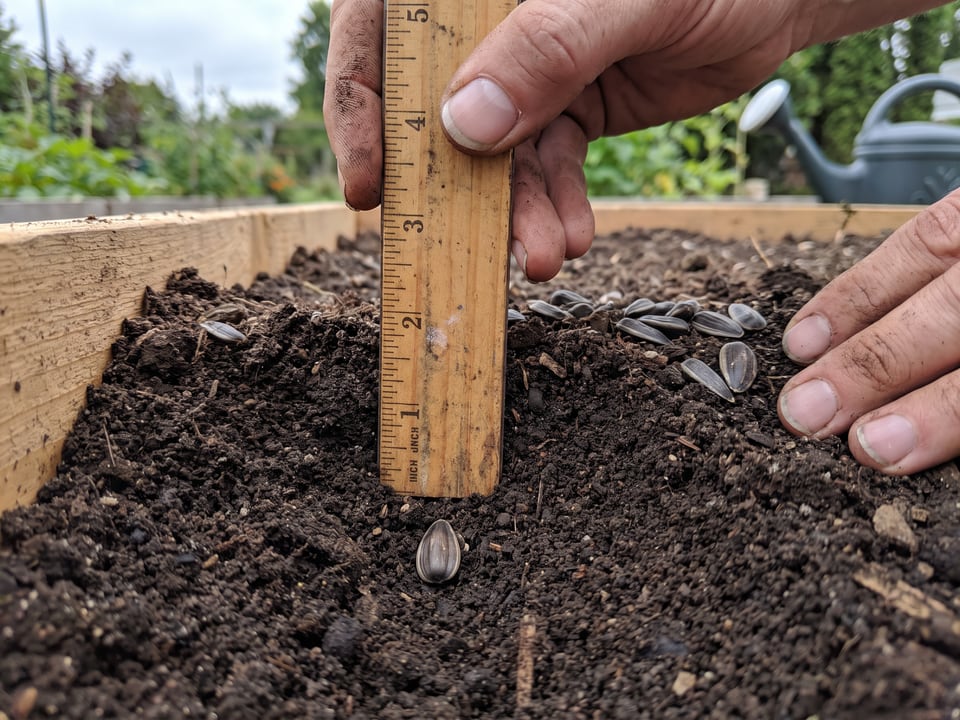
The UGA spacing for garden rows:
- Sow seeds 1 to 2 inches (2.5 to 5 cm) deep. Go deeper in sandy soil.
- Space seeds about 6 inches (15 cm) apart in the row.
- After they come up, thin to one plant every 12 to 15 inches (30 to 38 cm).
- Leave 2 to 3 feet (60 to 90 cm) between rows.
Water lightly every day for the first 7 to 10 days so the seed bed does not dry out during germination. After that, UGA says a couple of waterings a week are enough when it does not rain.
Spacing for cut flowers
Spacing changes flower size. Utah State found that plants 2 to 4 inches (5 to 10 cm) apart gave blooms 2 to 3 inches (5 to 8 cm) across, while 4 to 6 inches (10 to 15 cm) apart gave blooms 4 to 5 inches (10 to 13 cm) across. Cut-flower growers crowd plants on purpose because a smaller head suits a vase. If you want the biggest possible flowers on a giant variety, use the wider UGA spacing instead.
How long do sunflowers take to grow?
Most sunflowers bloom 50 to 110 days after sowing, depending on the variety. Utah State says harvest of cut-flower types starts about 50 to 60 days after seeding, and single-stem types reach maturity in 50 to 95 days depending on cultivar.
The varieties in our catalog show the same spread, with days counted from seed:
| Variety | Habit | Days to bloom |
|---|---|---|
| Jade | Branching | 48 |
| ProCut Orange | Single stem | 50 to 60 |
| Teddy Bear | Branching | 65 to 75 |
| Lemon Queen | Branching | 70 to 90 |
| Mammoth | Single stem | 80 |
| Titan | Single stem | 75 to 110 |
Cut-flower hybrids sit at the fast end and the giants at the slow end. If your season is short, pick from the top of that table or sow a giant as soon as the frost date passes.
How tall do sunflowers grow?
Sunflowers grow anywhere from about 1 foot to 16 feet (30 cm to 4.9 m) tall, depending on the variety. NC State gives a general range of 2 to 10 feet, with the very largest cultivars going beyond.
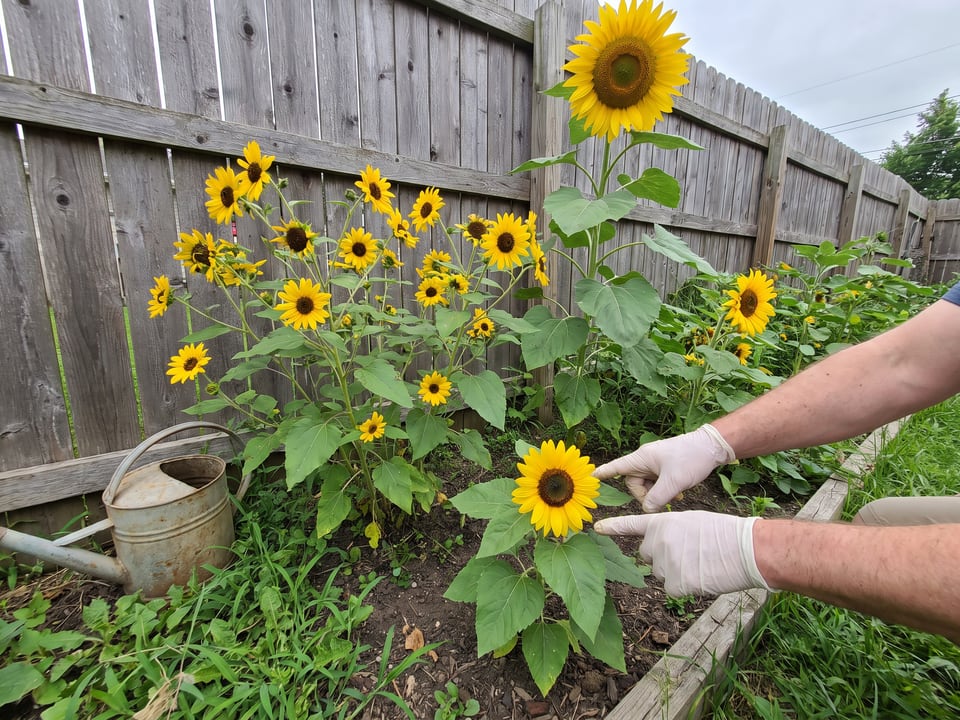
Heights from the sunflower varieties in our catalog, shortest to tallest:
| Variety | Height | Good for |
|---|---|---|
| SunBuzz | 12 to 20 in (30 to 51 cm) | Pots |
| Big Smile | 1 to 2 ft (30 to 61 cm) | Pots, edging |
| Sunspot | 18 to 24 in (46 to 61 cm) | Front of a bed |
| Teddy Bear | 35 to 42 in (89 to 107 cm) | Borders |
| Jade | 3 to 4 ft (91 to 122 cm) | Borders, cutting |
| ProCut Orange | 5 to 6 ft (152 to 183 cm) | Cutting |
| Lemon Queen | 5 to 7 ft (152 to 213 cm) | Back of a bed |
| Autumn Beauty | 8 to 10 ft (244 to 305 cm) | Screens |
| Mammoth | 12 ft (366 cm) | Giants |
| Titan | 10 to 14 ft (305 to 427 cm) | Giants |
| American Giant | 8 to 16 ft (244 to 488 cm) | Giants |
Browse the full list with height and color filters on the sunflowers page.
Short varieties are the answer for containers and small beds. Anything over about 6 feet ends up at the back of the border or along a fence, where it will not shade everything else.
Single-stem vs branching sunflowers
A single-stem sunflower makes one flower on one tall stem. A branching sunflower makes a main flower and then many smaller ones on side shoots for weeks. Which one you want depends on whether you are cutting them.
Utah State summarizes the difference for cut-flower growers:
- Single stem: one bloom per plant on stems about 24 to 48 inches (60 to 120 cm) long, and the need for succession sowing to keep flowers coming. Many are pollenless.
- Branching: about 3 to 8 stems per plant, but shorter stems of 10 to 18 inches (25 to 45 cm). Utah State notes branching types generally shed pollen, which shortens vase life.
Pollenless sunflowers for cut flowers
Pollenless sunflowers drop no yellow dust on the table and, per Utah State, last longer in a vase. Utah State says the ProCut series has been highly successful on flower farms in Utah. ProCut Orange and ProCut Red are both pollenless, single-stem and ready in 50 to 60 days. Some branching varieties are bred with little or no pollen too: Teddy Bear is listed with minimal pollen, and the pot type SunBuzz has a pollen-free disk.
If you grow sunflowers for bees and birds, pick one that makes pollen.
Do sunflowers come back every year?
Garden sunflowers (Helianthus annuus) are annuals. NC State notes they will not survive winter even in North Carolina. You sow new seed every spring, although heads left standing can drop seed that sprouts on its own the next year. The difference between the two plant types is covered in annuals vs perennials, and more summer annuals are collected on the annuals page.
Can you just throw sunflower seeds on the ground?
Utah State’s cut-flower guide says you can scatter seed on the soil surface and rake lightly to cover it. Covering it with 1 to 2 inches of soil, as UGA recommends, and keeping it moist for the first 7 to 10 days helps germination.
Other summer flowers to sow at the same time
Sunflowers go in the ground at about the same time as other warm-season annuals from seed. See how to grow zinnias and when to plant marigolds for the same frost-date approach, and the full-sun annuals collection for more ideas for the same bed.