When to plant marigolds: seed, transplant and bloom dates
Oct 2, 2026 · 8 min read
Plant marigolds outdoors after your last spring frost. Start seed indoors 4 to 6 weeks earlier, or 8 weeks for tall African types, for summer flowers.
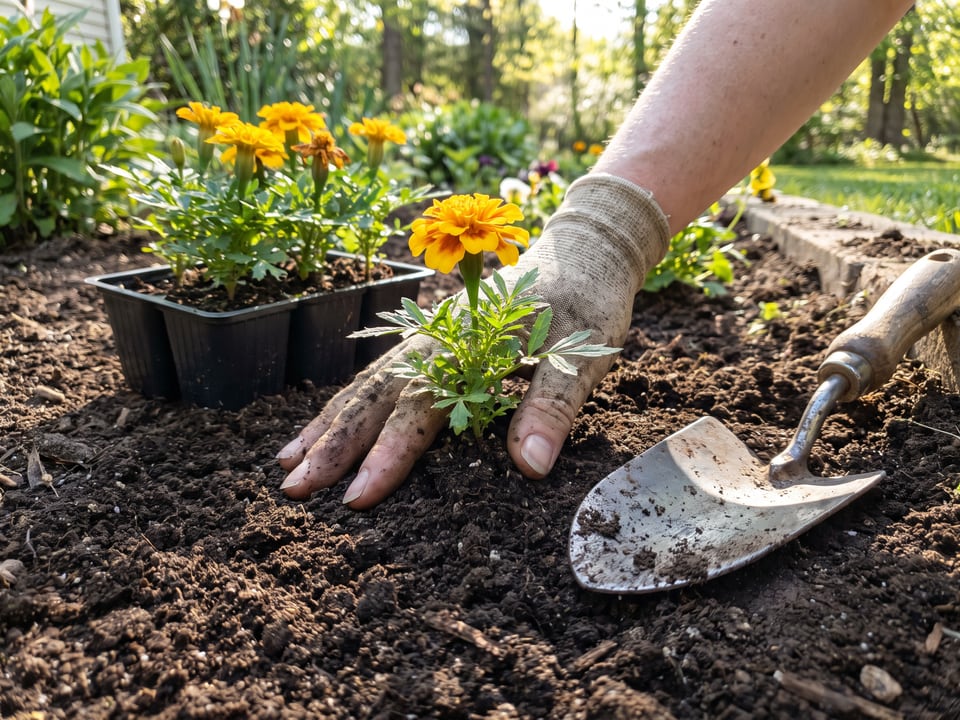
Plant marigolds outdoors after the last spring frost, once the soil has warmed. That applies both to sowing seed directly in the bed and to setting out transplants. If you want flowers sooner, start seed indoors 4 to 6 weeks before your planting date, or about 8 weeks ahead for tall African marigolds, according to Clemson’s Home & Garden Information Center. NC State’s plant toolbox gives a slightly wider window of 6 to 8 weeks before the last frost.
The date that matters is your own last frost, and it can differ by a month between two towns in the same state. The spring flower planting calendar looks up your last frost date by ZIP code; count backward from it.
When to plant marigolds by method
| Method | When | Source |
|---|---|---|
| Start seed indoors (French, signet) | 4 to 6 weeks before planting out | Clemson HGIC |
| Start seed indoors (African) | About 8 weeks before planting out | Clemson HGIC |
| Sow directly outdoors | After frost danger has passed and the soil is warm | Clemson HGIC |
| Set out transplants | After the last frost date | Clemson HGIC, NC State |
Marigolds are tender. NC State says to set African marigolds out “after the last frost date”, and the same rule holds for French and signet types. A late frost will kill young plants, so a week’s wait costs you less than replanting.
How long marigold seeds take to sprout
Marigold seed usually germinates in 5 to 7 days (Clemson).
When marigolds bloom after sowing
Days to bloom depend on the type. Seed companies list them per variety, and the spread in our catalog records is wide:
- Lemon Gem, a signet marigold: about 60 days from seed.
- Petite, a dwarf French marigold: 60 to 70 days from seed.
- Crackerjack, a tall African marigold: 70 to 85 days from seed.
- Inca II, a hybrid African series: 77 to 84 days from seed.
This explains the longer indoor head start for African marigolds. Once they start, marigolds bloom from early summer until frost (Clemson), and Illinois Extension gives a May to October bloom season.
French vs African vs signet marigolds
The type decides how early to start seed, how far apart to plant, and how tall the plants get. Our catalog files each variety under its botanical name.
| Type | Botanical name | Height | Flower size | Spacing |
|---|---|---|---|---|
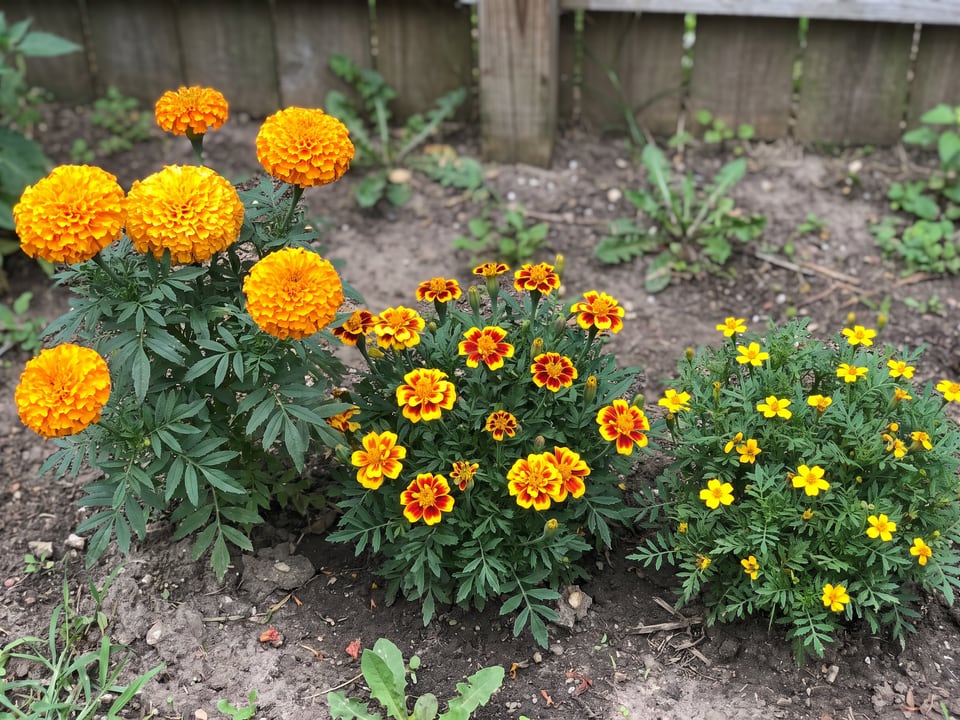
| French | Tagetes patula | 6 to 18 inches (15 to 45 cm) | Up to 2 inches (5 cm) | 8 to 10 inches (20 to 25 cm) |
| African (also sold as American or Aztec) | Tagetes erecta | Up to 36 inches (90 cm); NC State lists 1 to 4 feet | Up to 4 inches (10 cm) | 12 to 16 inches (30 to 40 cm) |
| Signet | Tagetes tenuifolia | 8 to 30 inches (20 to 75 cm) | 1 to 3 inches (2.5 to 7.5 cm) | Not given by the sources |
French and African figures are from Clemson; signet figures are from NC State’s entry for Tagetes tenuifolia.
French marigolds are the compact edging plants. Naughty Marietta grows 8 to 12 inches (20 to 30 cm) tall in its catalog record, and Durango about the same.
African marigolds are the tall, big-flowered ones that Clemson recommends for background plantings and cut flowers. Cempasúchil is listed at 3 to 4 feet (91 to 122 cm). Illinois Extension notes that tall varieties need support, while shorter types keep their shape better through the season.
Signet marigolds have fine, lacy leaves and many small single flowers. NC State describes the crushed foliage as aromatic and says flowers of some cultivars can be used sparingly as a garnish. Lemon Gem and Tangerine Gem are the classic examples.
There are also crosses between the two main species. Zenith is listed as an F1 triploid, Tagetes erecta × Tagetes patula.
Browse all types on the marigolds page.
How to plant marigolds
- Pick a sunny spot. Clemson calls for full sun, meaning 6 or more hours a day. Every annual marigold in our catalog is listed for full sun, so they fit well in the full-sun annuals collection.
- Check the soil. Clemson gives a pH of 5.5 to 7.0. Clemson recommends well-drained, loamy soil.
- Space by type: 8 to 10 inches (20 to 25 cm) for French, 12 to 16 inches (30 to 40 cm) for African (Clemson).
- Water in, then keep the soil evenly moist for the first couple of weeks, then aim for about 1 inch (2.5 cm) of water a week (Clemson).
Can I just scatter marigold seeds?
Yes, if you wait until after the last frost and the soil is warm. Seed scattered too early sits in cold soil. Cover it lightly, keep it moist until it sprouts, then thin the seedlings to the spacing above.
Do marigolds grow better in pots or in the ground?
Both work. NC State lists containers as a use for both African and signet marigolds, and Clemson lists containers among marigold uses. The sources above only give spacing for beds. A pot dries out faster than a bed, so check it more often than the 1-inch weekly guideline suggests.
How to grow marigolds through summer
Clemson and NC State both say removing spent flowers keeps the plants blooming. Pinch or cut each faded head back to the next leaf or bud.
Watch for pests in hot, dry weather. NC State lists thrips, slugs and spider mites for African marigolds.
Handle the plants with some care if you have sensitive skin. NC State notes that African marigold sap on broken skin, combined with sunlight, can cause redness, burning pain and blisters.
Do deer eat marigolds?
Deer usually leave them alone. NC State says African marigold is “seldom damaged by deer.” Seldom still means sometimes, especially when other food is scarce.
Do marigolds keep pests away?
Extension research on this is about root-knot nematodes in soil. The University of Florida’s Marigolds for nematode management says certain French marigolds (for example ‘Petite’, ‘Tangerine’ and ‘Single Gold’) and some African ones (including ‘Crackerjack’) resist root-knot nematodes. To get the effect, you grow them densely, with plants less than 7 inches apart, for at least two months before the vegetable crop, and you repeat it every season. UF also states that marigolds cannot eradicate nematodes. Clemson adds that planting marigolds among other plants as companions is ineffective against nematodes; the effect comes from growing them as a cover crop.
Neither source supports the claim that a few marigolds tucked between tomatoes keep insects off. UF notes that a compound released by marigold roots is insecticidal, but it works only while the roots are growing in the soil, and the publication describes no effect on insects above ground.
Are marigolds perennials?
No. The common garden marigolds (French, African and signet) are grown as annuals. They are killed by frost and do not come back from the roots. NC State lists signet marigold as “annual or herbaceous perennial”, but in US gardens it is treated as an annual. The one perennial marigold in our catalog is Sweet Mace (Tagetes lucida), listed for zones 8 to 11.
Marigolds that seem to come back every year usually grew from seed that dropped the fall before. Read more in annuals vs perennials, or see the full annuals collection.
How to save marigold seeds
Leave some flowers on the plant late in the season instead of deadheading them. Illinois Extension says to collect seed when the flower head is completely dry, brown and shriveled. Let the heads finish drying in a paper bag for a few weeks, then store the seed in a labeled envelope or sealed glass jar in a cool, dry place away from light.
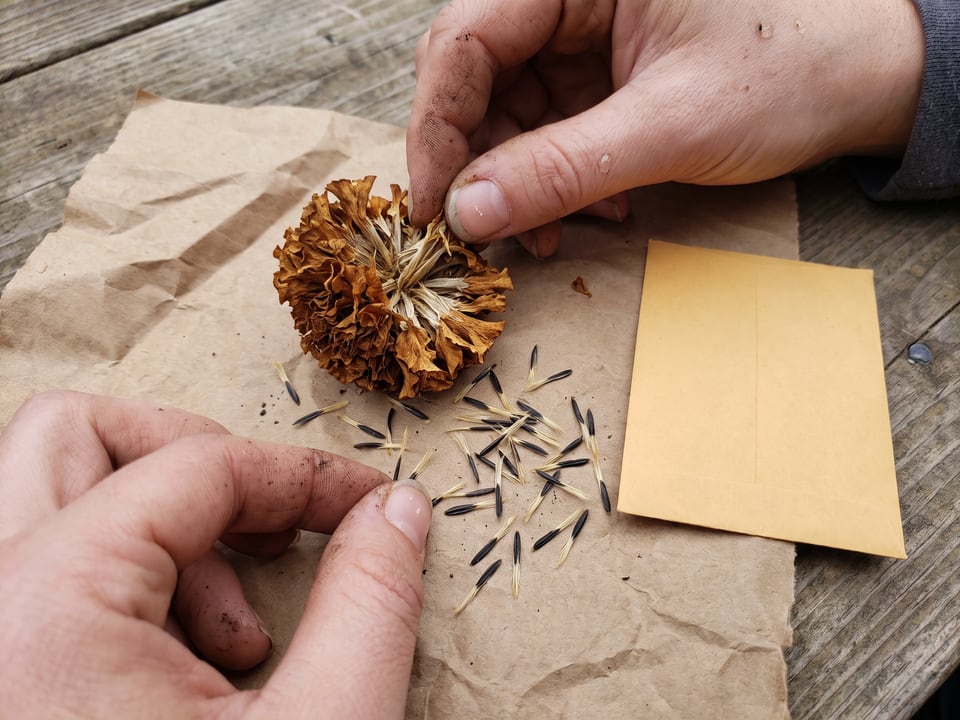
Hybrids will not come true from saved seed. Illinois warns that color or size often varies in the next generation. Inca II, Antigua and Zenith are hybrid series, so start with open-pollinated varieties such as Naughty Marietta if you want seed that looks like its parent.
Planting marigolds with other summer annuals
Marigolds share a planting date with zinnias and sunflowers: all three go out after the last frost. See how to grow zinnias and how to grow sunflowers to sow them together, and look up your first fall frost date in the fall planting calendar to know when the season ends.