How to grow zinnias from seed: sowing, bloom and seed saving
Oct 2, 2026 · 8 min read
How to grow zinnias from seed: sow ¼ inch deep in warm soil after the last frost or start indoors, thin, deadhead for more flowers and save seed.
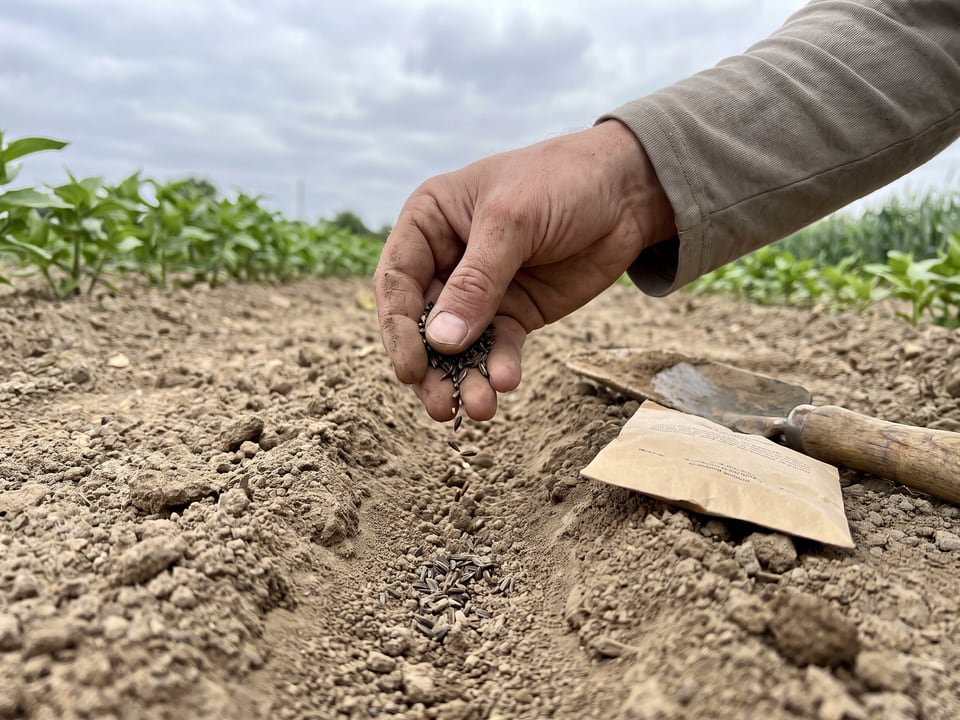
Zinnias are among the easiest flowers to grow from seed: sow them outdoors after your last spring frost, once the soil and air are warm, around 70 °F (21 °C), or start them indoors 4 to 6 weeks earlier. For the dates where you live, enter your ZIP code in the spring flower planting calendar; this guide covers the rest, from sowing depth to saving seed.
Clemson’s zinnia fact sheet gives the warmth target and the planting depth. The Wisconsin Horticulture zinnia page gives the indoor window and germination temperature. Where a number below has no source behind it, we left the number out.
Sowing zinnias outdoors after frost
Zinnias are frost-tender annuals, so the calendar starts at the last frost. North Carolina State’s plant toolbox entry for Zinnia elegans puts it simply: sow seed directly in the ground after the last frost date. Clemson adds that the soil and air should be around 70 °F.
The frost date and the soil temperature do not always line up. In a cool spring the frost can be over while the ground is still cold, and seed sown into cold soil sits there. Wisconsin Horticulture says to seed directly once the soil warms.
The planting calendar counts from the “safe” last frost date, the one after which a frost came in only one year in ten, which is the date to plan a direct sowing around if you do not want to replant.
Zones and sowing dates
USDA zones describe winter cold, not spring timing, so a zone number alone does not tell you when to sow. Two gardens in zone 7 can have last frosts weeks apart. Use your ZIP code in the spring flower planting calendar instead of a zone chart. In the warmest parts of the South the last frost comes early, and zinnias can go in correspondingly early.
Starting zinnias indoors
Start zinnias indoors 4 to 6 weeks before you plan to sow outside, according to Wisconsin Horticulture. Germinate them at 65 to 70 °F (18 to 21 °C).
Some catalog records carry their own indoor window. Profusion, for example, lists 4 to 6 weeks before the last frost, the same range as the extension guidance.
Wisconsin notes that transplants get a jump on the season.
How deep to plant zinnia seeds
Plant zinnia seeds ¼ inch (about 6 mm) deep. That depth comes from Clemson’s directions for sowing in the garden.
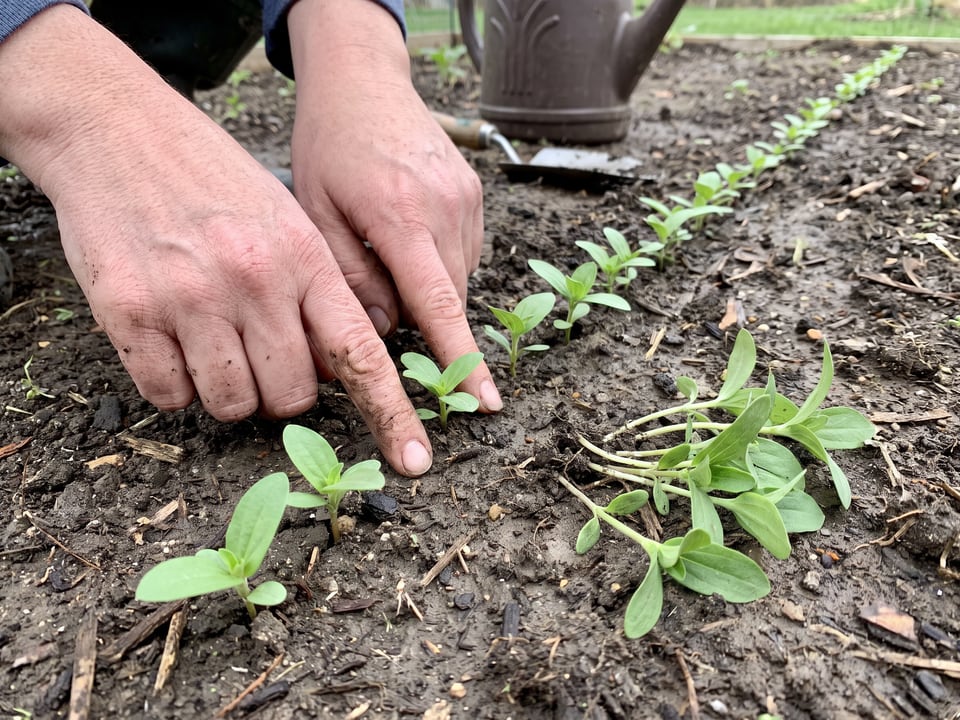
Spacing depends on plant size. Clemson recommends planting or thinning dwarf types 8 to 9 inches (20 to 23 cm) apart, and taller 2 to 3 foot cultivars about a foot (30 cm) apart, with rows 12 to 18 inches apart (Clemson gives both a foot and 12 to 18 inches). Generous spacing also matters for disease, covered below.
| Plant type | Spacing (Clemson) | Examples from the catalog |
|---|---|---|
| Dwarf and bedding | 8 to 9 in (20 to 23 cm) | Crystal, 20 to 25 cm tall; Profusion, 36 to 46 cm |
| Tall, 2 to 3 ft | about 12 in (30 cm) | Lilliput, 61 to 91 cm |
| Very tall cut-flower strains | up to 24 in (61 cm) | Benary’s Giant, 102 to 127 cm; State Fair, 91 to 117 cm |
Heights come from the variety records. Browse all forms and heights on the zinnias page.
How to grow zinnias after sowing
Zinnias need at least 6 hours of full sun, per Clemson, in fertile, well-drained soil. Give them about 1 inch (2.5 cm) of water a week and water at the base of the plants. Overhead watering keeps the leaves wet, and wet leaves invite fungal and bacterial problems.
Illinois Extension names powdery mildew as the biggest issue it has had with zinnias. The NC State entry notes that fungal problems are common in shaded or moist conditions in the South and that good air circulation, full sun and drainage help prevent them. Wisconsin makes the same two recommendations: space for air movement and choose resistant varieties.
Resistance is where variety choice pays off. Clemson describes the Profusion series as having higher resistance to powdery mildew and leaf spot, and Zahara, a Zinnia marylandica series bred at the University of Maryland, as disease-resistant and heat-tolerant. NC State also notes that zinnias bloom continuously in cool summer climates but may slow down at the peak of summer, while Profusion tolerates heat and humidity.
If you grow for bees and butterflies, Illinois Extension points out that fully double flowers produce little pollen and nectar. Single-flowered types such as Profusion or Crystal are the better choice there.
When do zinnias bloom from seed?
Zinnias bloom 8 to 12 weeks after planting, according to Clemson. Wisconsin says they give season-long color through the summer.
The variety records narrow that range. Days to bloom below are counted from seed:
| Variety | Form | Height | Days to bloom from seed |
|---|---|---|---|
| Crystal | Single | 20 to 25 cm (8 to 10 in) | 50 to 55 |
| Dreamland | Dahlia-flowered | 20 to 41 cm (8 to 16 in) | 56 |
| Profusion | Single | 36 to 46 cm (14 to 18 in) | 65 to 75 |
| Zinderella | Scabiosa-flowered | 102 to 127 cm (40 to 50 in) | 70 |
| Queen Lime | Dahlia-flowered | 76 to 102 cm (30 to 40 in) | 75 to 85 |
| Benary’s Giant | Dahlia-flowered | 102 to 127 cm (40 to 50 in) | 75 to 90 |
| Macarenia | Dahlia-flowered | 61 to 91 cm (24 to 36 in) | 60 to 95 |
In these records the compact bedding types flower first and the tall cut-flower strains take longest. If you sow only once, a quick dwarf type and a tall type together give you color early and stems for cutting later.
Is it too late to plant zinnia seeds?
It is not too late as long as the plants have 8 to 12 weeks of warm weather ahead before your first fall frost. That is Clemson’s bloom window, counted backward. Check your average first frost with the first frost dates tool, count back about 12 weeks, and pick a fast variety if you are close to the line. Crystal and Dreamland, at 50 to 56 days in their records, leave the most margin.
A late sowing also works as a second planting.
Deadheading zinnias
Deadheading keeps zinnias flowering. Illinois Extension says it helps ensure a season of blooms, and Clemson says removing spent flowers encourages continuous blooming instead of seed production. Cut the faded flower back to a pair of leaves or a side shoot.
Cutting for the vase does the same job. Illinois reports that most zinnias last about a week in a vase and sometimes up to two.
Profusion is the exception. NC State notes that its new flowers grow above the old ones, so it needs no deadheading.
How to save zinnia seeds
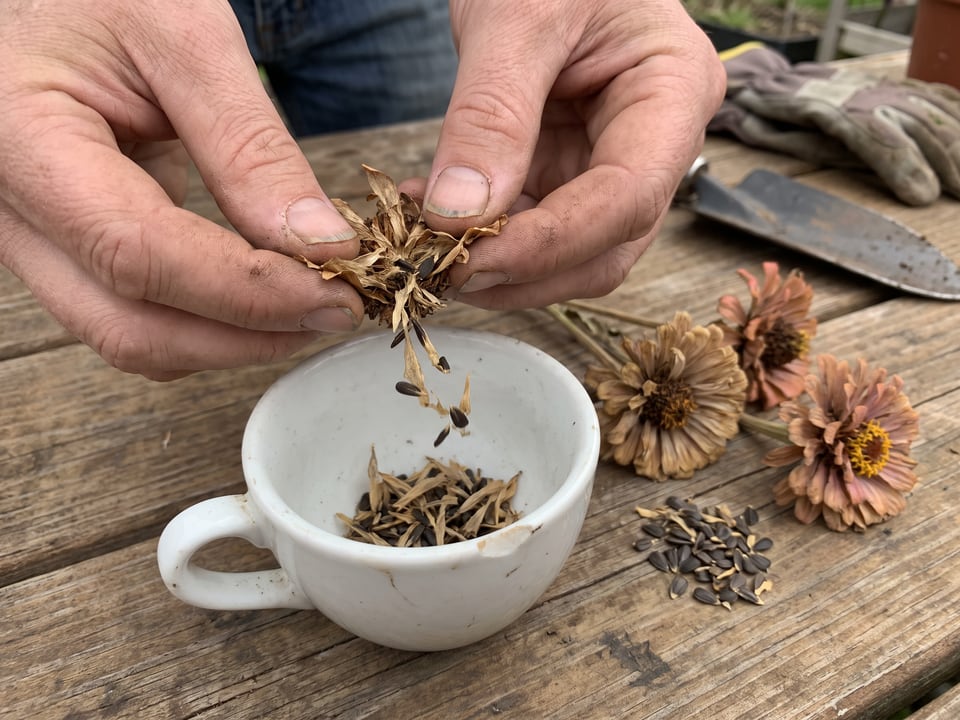
Leave a few of the best flowers on the plant until the head is completely shriveled and dry. The seeds sit at the base of the dried petals. An Ask Extension answer on saving zinnia seeds suggests cutting the stem over a cup, because dry seeds drop easily.
Whether saved seed comes back looking like the parent depends on the variety:
Open-pollinated and heirloom types are the ones worth saving; the catalog records describe State Fair, Oklahoma and Macarenia as open-pollinated. F1 hybrids such as Profusion, Dreamland and Uproar Rose may not come true from seed, which the Ask Extension answer also says, while adding that it is worth trying.
Double flowers can make seed saving harder too: Illinois notes that the doubling mutation cuts down the reproductive parts of the flower.
Do zinnias come back every year?
No. Common zinnias (Zinnia elegans) are annuals, and NC State lists them as completing their life cycle in one season. The plants die at the first hard frost. Wisconsin notes one exception, Zinnia grandiflora, a perennial hardy to zone 4a, but it is a different plant from the garden zinnias sold for cutting and bedding.
Zinnias you see in the same spot next spring usually grew from dropped seed, and from hybrids that seed may not look like its parents. For the full picture of which garden flowers return, see annuals vs perennials, and for other flowers grown the same way, browse the annuals collection. Marigolds follow nearly the same calendar; see when to plant marigolds. If you are sowing sunflowers in the same bed, how to grow sunflowers covers their timing.