Cut flower garden: what to grow and when to cut it
Oct 2, 2026 · 8 min read
Plan a cut flower garden: best flowers for cutting, sowing sunflowers every 1 to 3 weeks, and the bud stage to cut zinnias, dahlias, peonies and tulips.
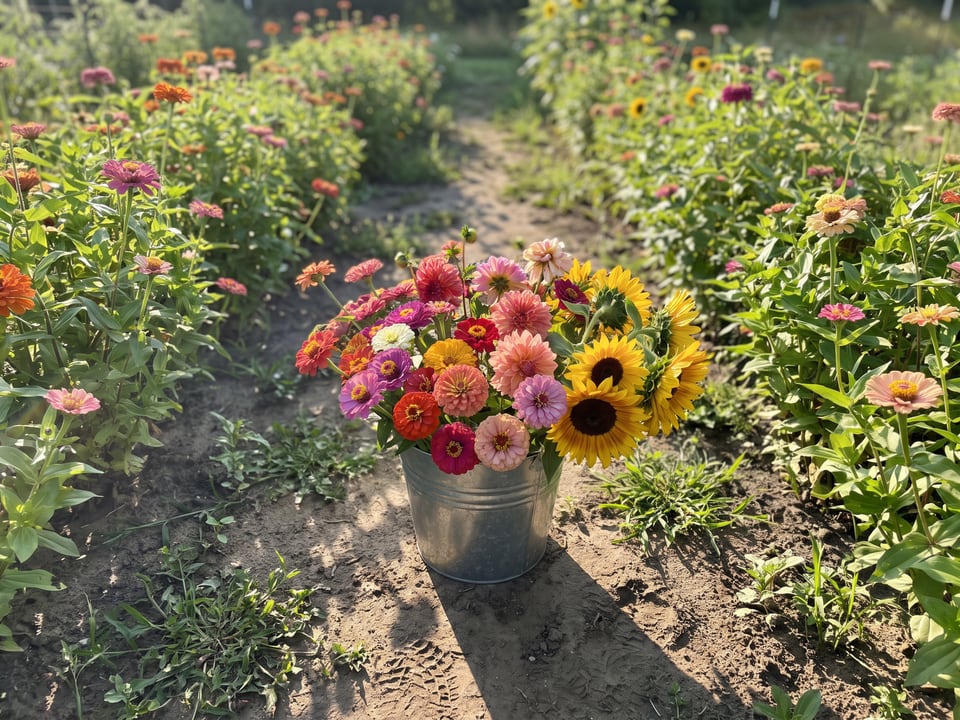
A cut flower garden is a sunny bed planted in rows for picking. Grow a few annuals that rebloom when you cut them (zinnias, dahlias, branching sunflowers, marigolds), add perennials and bulbs that give one flush each spring or summer (peonies, tulips, daffodils, lilies), and cut each kind at its own stage of opening.
Cut flower garden plan: site and layout
Put the bed in full sun. Penn State Extension’s guide to growing cut flowers notes that most cut flowers do best in full sun and that rows make harvesting easier. A cutting garden is a production bed. You walk into it with a bucket, so leave paths wide enough to kneel in and plant in straight rows you can reach from both sides.
A workable plan splits the bed into three zones:
- Annual rows for zinnias, sunflowers, marigolds and dahlias. These carry the garden from midsummer to frost.
- A perennial strip along one edge for peonies, coneflowers and black-eyed Susans, which stay in place for years.
- A bulb corner for tulips, daffodils and lilies. Tulips and daffodils go in the ground in fall; lilies stay put.
Keep the perennials on the edge so you can till or replant the annual rows each spring without digging around crowns. If you are unsure which of your flowers come back, the guide to annuals vs perennials sorts them by zone.
Best flowers for a cutting garden
The best flowers for cutting have long stems and either keep producing after you cut or open reliably in water. Here is how the flowers in our catalog fit.
Annuals that keep producing
For zinnias, choose tall types: Benary’s Giant and California Giant both grow past 3 feet in their catalog records, while dwarf bedding types give stems too short for a vase. Penn State recommends choosing zinnias resistant to powdery mildew and giving them good air circulation.
Dahlias bloom from midsummer until frost and come in every form from tight balls to dinner plates. Café au Lait reaches about 4 feet in its record. Planting details are in how to plant dahlia tubers.
Marigolds and sunflowers fill the rest of the annual rows. Sunflowers need their own section below because the type you choose changes how you plant them.
Perennials and bulbs for one big flush
Peonies give a few weeks of cutting in late spring and then nothing for the rest of the year. Coral Charm is one of the peonies in the catalog.
Clemson’s rudbeckia factsheet calls black-eyed Susans excellent cut flowers for their strong stems, and Wisconsin Extension suggests planting them in rows in a cutting garden. Tall kinds like Little Henry give usable stem length. Coneflowers sit in the same perennial strip.
Tulips, daffodils and lilies fill the gap before the annuals start. Lollypop is an Asiatic lily, the type with the vase-life figure below.
For a wider pool of returning plants, browse the perennials collection or the full-sun annuals.
Single-stem vs branching sunflowers for cutting
Pick single-stem sunflowers if you want long stems and pollen-free vases, and branching sunflowers if you want many flowers from fewer plants. Utah State’s sunflower cut flower research gives the numbers:
| Single-stem | Branching | |
|---|---|---|
| Stems per plant | 1 | about 3 to 8 |
| Stem length | about 24 to 48 inches (60 to 120 cm) | about 10 to 18 inches (25 to 45 cm) |
| In-row spacing | 4 to 6 inches (10 to 15 cm) | 18 to 24 inches (45 to 60 cm) |
| Pollen | pollenless varieties available | sheds pollen |
| Resow | every 1 to 3 weeks | every 2 to 3 weeks |
Harvest starts about 50 to 60 days after seeding or transplant, per the same source. ProCut Lemon Lite is a pollenless single-stem type, so it won’t drop yellow dust on the tablecloth. Autumn Beauty is a branching mix that bears pollen. Sowing dates are in how to grow sunflowers.
Succession planting for a steady supply
Succession planting means sowing the same flower again every few weeks so a new batch blooms as the last one fades. It matters most for single-stem sunflowers, which give one flower and are done. Utah State’s interval of every 1 to 3 weeks is the one number our sources give.
Cut-and-come-again annuals like zinnias need it less, since cutting itself keeps them going. Start the first sowing after your last frost; the spring planting calendar by ZIP gives a date for each flower, and shows your last frost date. Stop sowing when the crop would no longer reach harvest before your first fall frost, which the fall planting calendar also looks up by ZIP.
What does cut and come again mean?
A cut-and-come-again flower makes new flowering stems after you cut one, so picking increases the harvest instead of ending it. Penn State’s method is to cut the stem ¼ inch above a new side shoot, leaf or bud, which pushes new growth from that point. Wisconsin Extension says the same about black-eyed Susans: deadheading spent flowers encourages more bloom.
How to harvest cut flowers
Cut in the cool part of the day and put the stems in water right away. Penn State says to harvest before the heat of the day with a bucket of water at hand, and Oregon State’s dahlia publication calls the cool of the morning the best time for dahlias.
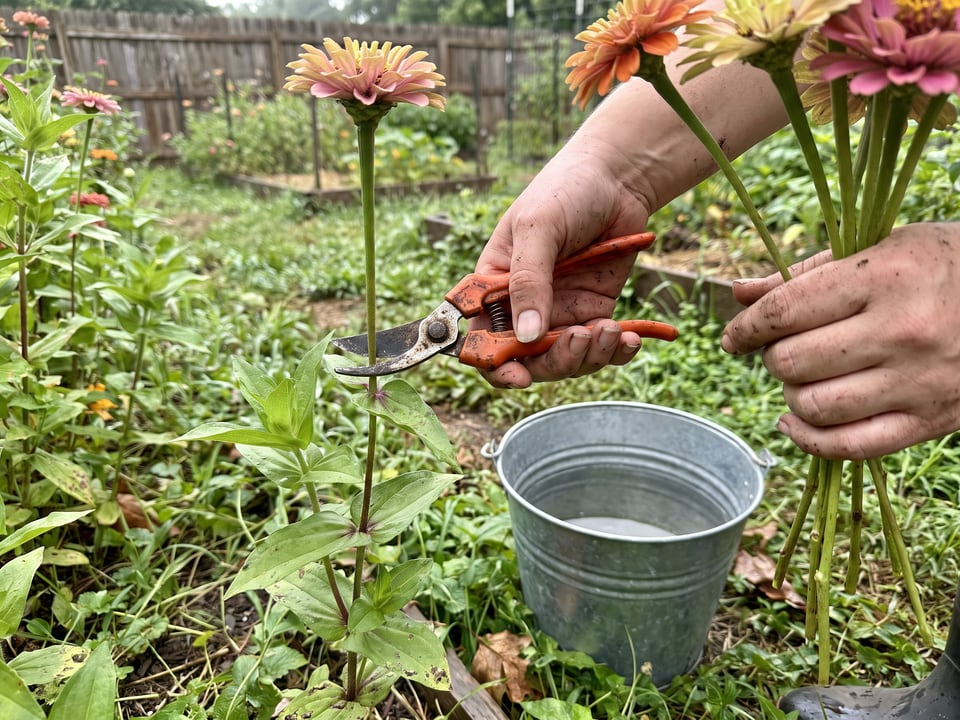
Then cut each flower at the right stage. Penn State notes that fully open flowers look good in the garden but soon fade in a vase. Some flowers keep opening after you cut them; others stop.
When to cut each flower
| Flower | When to cut | Source |
|---|---|---|
| Dahlia | Open or nearly open; buds will not open once cut | Oregon State |
| Sunflower | Petals lifting from the center disk (“cup stage”), not fully open | Utah State |
| Peony | “Marshmallow stage”: bud soft and squishy, no longer hard | Illinois Extension |
| Tulip | Petals just beginning to show color, before fully colored or open | Iowa State |
| Lily | Asiatic lilies: as flowers start to show color and open | Illinois Extension |
| Daffodil | No cutting stage given; Illinois advises buying daffodils in bud. Condition alone (below) | Illinois Extension |
| Zinnia | Fully open | Illinois Extension |
| Marigold, coneflower, black-eyed Susan | No stage given in the sources we read; cut in the cool of the day | Penn State (timing only) |
A few details for specific flowers:
- Illinois Extension’s note on peonies and ants says marshmallow-stage buds open fully within days, and you can dip them in water to wash off ants. More on stretching the season is in how to plant peonies.
- Iowa State’s tulip guide says the stems keep growing after harvest and can stand up to 6 inches (15 cm) taller after 5 to 7 days. Arrange low so they have room.
- Oregon State also recommends removing the outer two of the three buds at the end of each branch for longer stems.
- On lilies, remove the anthers as the flowers open, because the pollen stains (Illinois Extension). If you have cats, keep lilies out of the house altogether: every part of the plant, pollen included, can cause kidney failure in cats; see flowers toxic to cats.
Why daffodils need their own vase
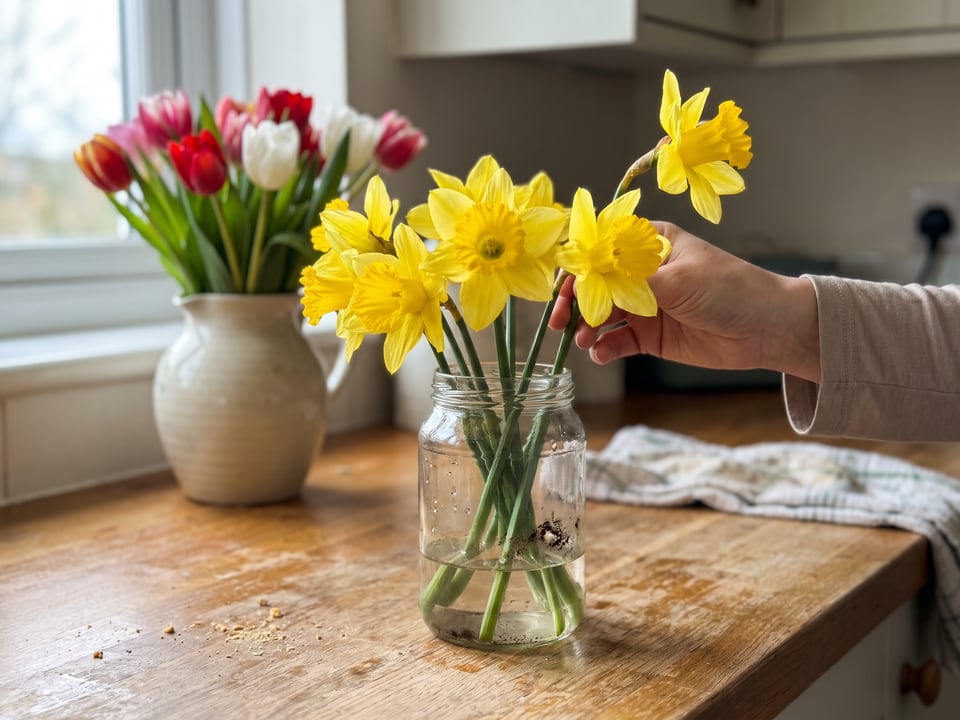
Daffodil sap shortens the life of other flowers in the same vase. Illinois Extension’s bouquet care article says unconditioned daffodils can cut the vase life of other species by up to half. Stand freshly cut daffodils in their own warm water for 12 to 24 hours, then add them to the mixed bouquet. For growing them, see how to plant daffodil bulbs.
How to make cut flowers last longer
Vase life comes down to clean water, open stems and a cool room. From the extension sources above:
- Dahlias: cut on a diagonal and set the stem ends in 2 to 3 inches (5 to 8 cm) of very hot, not quite boiling, water for at least an hour. Oregon State says treated blooms last four to six days.
- Asiatic lilies: up to 10 days in water with floral preservative in the right conditions, per Illinois Extension.
- All flowers: recut the stems at every water change and fill the vase nearly to the top. Illinois Extension recommends flower food packets, which contain a carbohydrate, citric acid and a biocide, and its fresh-cut flower care notes say most cut flowers prefer 65 to 72 °F (18 to 22 °C).
When to start a cut flower garden
Start in fall if you want spring flowers: tulip and daffodil bulbs go in the ground then, and the bulb planting tool gives the window for your ZIP. Peony timing is in how to plant peonies. Zinnias, sunflowers and marigolds wait for warm soil after the last spring frost; see how to grow zinnias for the zinnia dates.